Showing posts with label propaganda. Show all posts
Showing posts with label propaganda. Show all posts
10/23/2022
The Origins of Halloween
The Origins of Halloween
The All American Holiday (From the tract.)
The Date.
Pope Gregory III (d 741) moved All saints Day from May 13th to November 1st to coincide with the dedication of a new cathedral. Of course the evening vigil was celebrated on October 31st hence All Hallows Eve or Hallowe'en.
The Dead
In 997 St. Odillo of Cluny, S. France, added a feast of All Souls. (faithful departed in heaven and purgatory) However, the Irish wondered about those in hell. They thought that the damned might cause trouble if they weren't remembered. So, at least in Ireland, ALL the dead were remembered even though "All Damned Day" was never allowed in the church calendar.
The Costumes
In the 14th and 15th centuries the French started "The Dance Macabre" which was an artistic reminder of their own mortality at a time when the Bubonic Plague was sweeping their country. (Europe lost half her population.) To do this dance, held on All Soul's day, November 2nd, they dressed up in ghoulish costumes. In North America in the 1700s, the French and Irish settlers began to intermarry thus the two costumes were blended.
Trick or Treat
During the 1500s through the 1700s in Protestant England, Catholics were persecuted and many martyred. (It was a capitol offense for a priest to say Mass.)
One of their attempted uprisings against their oppressors backfired when Guy Fawkes, the man guarding the gunpowder, meant to blow up King James I, was captured and hanged.
So November 5th became a great celebration for the Protestants in England (to this day). During that period, bands of revelers would visit Catholics in the dead of night, dressed up in masks, demanding beer and cakes for their celebration. Thus "trick or treat".
Witches and Jack-O-Lanterns
In the late 1800s the greeting card industry tried introducing "The Halloween Card" and since Halloween was already creepy, why not add witches? Also in the 1800s, ill-informed folklorists thought that Halloween was druidic and pagan in origin. Since pagans had used lamps made of turnips (not pumpkins) in their harvest festival, these were added too.
Conclusion
So enjoy being an American, have fun at Halloween but remember its origins; it was a time to remember saints and loved ones, faithful souls who died. Obviously as Christians we stand against witchcraft ("There shall not be found among you any one who...practices divination, a soothsayer, or an augur, or a sorcerer, or a charmer, or a medium, or a wizard, or a necromancer. For whoever does these things is an abomination to the LORD ." Deuteronomy 18:10-12) but we can still have wholesome fun and yet teach our children the real meaning of Halloween.

4/02/2013
Jason Hauser.'s latest attack: "A Humble Pope?"
A Humble Pope?
Written by Jason Hauser.
When Pope Benedict XVI's successor, Jorge Bergoglio, was announced as the new Pope, the one word that many used to describe him was "humble." The Italian born pope from Argentina is of the Jesuit order which is known for their vows of poverty and work among the poor.
Hauser here displays his lack of due diligence in his articles because look at Pope Francis bio.
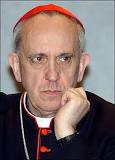
Pope FrancisFrancis is the 266th and current Pope of the Catholic Church, elected on 13 March 2013. As such, he is Bishop of Rome, the head of the worldwide Catholic Church and sovereign of the Vatican City State.
Born: December 17, 1936 (age 76), Buenos Aires
Nationality: Argentine
Education: University of Buenos Aires
Parents: Regina Maria Sivori, Mario Jose Bergoglio
Pope Francis is Argentinian and only his dad was Italian born.
Pictures and articles have surfaced revealing that as an archbishop, Bergoglio took the public bus and cooked his own meals. When it was announced that he would be known as Pope Francis I, the connection was quickly made to St. Francis of Assisi, who renounced his wealth to live a life of poverty and service to others. Many have rejoiced that this is just the kind of humble leader that will further ecumenical relationships and win greater favor for Roman Catholicism.
He is also wrong on the small point that His Holiness is simply Pope Francis. There is no Pope Francis I until and unless there is a Pope Francis II.
Francis of Assisi is known as "the mirror of Christ", so how can a Pope who chooses his name as a patron and so far has been so exemplary of Our Blessed Lord Jesus Christ be a problem?
There is great irony however with the premise of a humble Pope. The papacy overseeing and affirming the teachings of Roman Catholicism has long been anything but humble. In the 14th century, Pope Boniface VIII was so bold as to claim in his papal bull, Unam Sanctum: "We declare, say, define, and pronounce that it is absolutely necessary for the salvation of every human creature to be subject to the Roman Pontiff." Fifty years later, Pope clement VI declared in his writing, Super Quisbusdam, "...no man of the wayfarers outside of the faith of this Church, and outside the obedience of the Pope of Rome, can finally be saved...all who have raised themselves against the faith of the Roman Church and have died in final impenitence have been damned and have descended to the eternal punishments of hell." Just before the turn of the 20th century, Pope Leo XIII declared, "He who would separate himself from the Roman Pontiff has no further bond with Christ." These papal declarations, by popes who claim to speak infallibly on faith and morals, couldn't be more clear, that salvation is dependent upon obedience and submission to popes. The Biblical response to this nonsense can be found in Acts 4:12; Col. 1:18, 1 Tim. 2:5; John 14:6 and Eph. 5:23.
Which has been the consistent teaching of the Catholic Church for 2,000 years. The fact is that those who are fully informed as to the truths of the Catholic faith and then chose to reject them, do so at the peril of their souls. This is no different than so many non-Catholics who preach that anyone who does not "get saved"/"accept Jesus as personal Lord and Savior" face the same fate.
Our Blessed Lord Jesus Christ established only one Church. and this is no news.
Over the last 1500 years, Rome has written her own history and would lead all to believe that such bold and arrogant statements by Popes are fully justified.
Naturally Hauser offers no documentation of this rewriting of any history, because no such thing has occurred and so no evidence exists. Sadly some of his readers will be gullible enough not to question that and that is one problem with propaganda like this.
But throughout history we see continual opposition to Rome's unbiblical claims. In the third century, for example, Cyprian called out the bishop of Rome, Stephen I, for claiming to excommunicate all churches who disagreed with him. Cyprian wrote that no one should "set himself up as a bishop of bishops" or by "tyrannical terror force his colleagues to the necessity of obeying."
Naturally this is removed from context and the smart man will carefully review the following. SAINT CYPRIAN OF CARTHAGE
Later in the 6th century, the bishop of Rome, Gregory I, was very outspoken against the bishop of Constantinople, John IV, using the title "Universal Bishop." He warned him of "all who flatter you and offer you this name in error" and not to "foolishly consent to be called by the proud title." While history reveals that Gregory used his powerful position in questionable ways, he was resolved to reject such antichristian pride and usurpation of Christianity by a singular bishop.
This is just more inaccurate anti-Catholic propaganda that does not prove true in the context of the historic facts, Take note:
In view of later developments Gregory's dealings with the Oriental Churches, and with Constantinople in particular, have a special importance. There cannot be the smallest doubt that Gregory claimed for the Apostolic See, and for himself as pope, a primacy not of honor, but of supreme authority over the Church Universal. In Epistle 13.50, he speaks of "the Apostolic See, which is the head of all Churches", and in Epistle 5.154, he says: "I, albeit unworthy, have been set up in command of the Church." As successor of St. Peter, the pope had received from God a primacy over all Churches (Epistle 2.46; 3.30; 5.37; 7.37). His approval it was which gave force to the decrees of councils or synods (Epistle 9.156), and his authority could annul them (Epistles 5.39, 5.41, 5.44). To him appeals might be made even against other patriarchs, and by him bishops were judged and corrected if need were (Epistles 2.50; 3.52; 3.63; 9.26; 9.27). This position naturally made it impossible for him to permit the use of the title Ecumenical Bishop assumed by the Patriarch of Constantinople, John the Faster, at a synod held in 588. Gregory protested, and a long controversy followed, the question still at issue when the pope died. A discussion of this controversy is needless here, but it is important as showing how completely Gregory regarded the Eastern patriarchs as being subject to himself; "As regards the Church of Constantinople," he writes in Epistle 9.12, "who can doubt that it is subject to the Apostolic See? Why, both our most religious lord the emperor, and our brother the Bishop of Constantinople continually acknowledge it."
At the same time the pope was most careful not to interfere with the canonical rights of the other patriarchs and bishops. With the other Oriental patriarchs his relations were most cordial, as appears from his letters to the patriarchs of Antioch and Alexandria.
Regardless of any winsome humble acts that Pope Francis might display, his very position and affirmation of the teachings of Roman Catholicism reveal that he is, in fact, a cleverly disguised deceiver of a false gospel (2 Pet. 2:1-3).
Which is your errant opinion Mr Hauser and you are entitled to it, but the rest of the world is entitled also to the truth. I feel pretty certain that few people will accuse you or your boss Mike Gendron of many "winsome humble acts" especially after seeing how you misrepresent Catholic teachings and attempt to distort them by cherry picking them over out of context.
Perhaps readers here will also be interested in my blog article that speaks to who exactly is offering " a cleverly disguised deceiver of a false gospel".
Who REALLY Preaches "A Different Gospel"?
Pax Domini sit semper vobiscum.
Written by Jason Hauser.
When Pope Benedict XVI's successor, Jorge Bergoglio, was announced as the new Pope, the one word that many used to describe him was "humble." The Italian born pope from Argentina is of the Jesuit order which is known for their vows of poverty and work among the poor.
Hauser here displays his lack of due diligence in his articles because look at Pope Francis bio.

Pope FrancisFrancis is the 266th and current Pope of the Catholic Church, elected on 13 March 2013. As such, he is Bishop of Rome, the head of the worldwide Catholic Church and sovereign of the Vatican City State.
Born: December 17, 1936 (age 76), Buenos Aires
Nationality: Argentine
Education: University of Buenos Aires
Parents: Regina Maria Sivori, Mario Jose Bergoglio
Pope Francis is Argentinian and only his dad was Italian born.
Pictures and articles have surfaced revealing that as an archbishop, Bergoglio took the public bus and cooked his own meals. When it was announced that he would be known as Pope Francis I, the connection was quickly made to St. Francis of Assisi, who renounced his wealth to live a life of poverty and service to others. Many have rejoiced that this is just the kind of humble leader that will further ecumenical relationships and win greater favor for Roman Catholicism.
He is also wrong on the small point that His Holiness is simply Pope Francis. There is no Pope Francis I until and unless there is a Pope Francis II.
Francis of Assisi is known as "the mirror of Christ", so how can a Pope who chooses his name as a patron and so far has been so exemplary of Our Blessed Lord Jesus Christ be a problem?
There is great irony however with the premise of a humble Pope. The papacy overseeing and affirming the teachings of Roman Catholicism has long been anything but humble. In the 14th century, Pope Boniface VIII was so bold as to claim in his papal bull, Unam Sanctum: "We declare, say, define, and pronounce that it is absolutely necessary for the salvation of every human creature to be subject to the Roman Pontiff." Fifty years later, Pope clement VI declared in his writing, Super Quisbusdam, "...no man of the wayfarers outside of the faith of this Church, and outside the obedience of the Pope of Rome, can finally be saved...all who have raised themselves against the faith of the Roman Church and have died in final impenitence have been damned and have descended to the eternal punishments of hell." Just before the turn of the 20th century, Pope Leo XIII declared, "He who would separate himself from the Roman Pontiff has no further bond with Christ." These papal declarations, by popes who claim to speak infallibly on faith and morals, couldn't be more clear, that salvation is dependent upon obedience and submission to popes. The Biblical response to this nonsense can be found in Acts 4:12; Col. 1:18, 1 Tim. 2:5; John 14:6 and Eph. 5:23.
Which has been the consistent teaching of the Catholic Church for 2,000 years. The fact is that those who are fully informed as to the truths of the Catholic faith and then chose to reject them, do so at the peril of their souls. This is no different than so many non-Catholics who preach that anyone who does not "get saved"/"accept Jesus as personal Lord and Savior" face the same fate.
Our Blessed Lord Jesus Christ established only one Church. and this is no news.
Over the last 1500 years, Rome has written her own history and would lead all to believe that such bold and arrogant statements by Popes are fully justified.
Naturally Hauser offers no documentation of this rewriting of any history, because no such thing has occurred and so no evidence exists. Sadly some of his readers will be gullible enough not to question that and that is one problem with propaganda like this.
But throughout history we see continual opposition to Rome's unbiblical claims. In the third century, for example, Cyprian called out the bishop of Rome, Stephen I, for claiming to excommunicate all churches who disagreed with him. Cyprian wrote that no one should "set himself up as a bishop of bishops" or by "tyrannical terror force his colleagues to the necessity of obeying."
Naturally this is removed from context and the smart man will carefully review the following. SAINT CYPRIAN OF CARTHAGE
Later in the 6th century, the bishop of Rome, Gregory I, was very outspoken against the bishop of Constantinople, John IV, using the title "Universal Bishop." He warned him of "all who flatter you and offer you this name in error" and not to "foolishly consent to be called by the proud title." While history reveals that Gregory used his powerful position in questionable ways, he was resolved to reject such antichristian pride and usurpation of Christianity by a singular bishop.
This is just more inaccurate anti-Catholic propaganda that does not prove true in the context of the historic facts, Take note:
In view of later developments Gregory's dealings with the Oriental Churches, and with Constantinople in particular, have a special importance. There cannot be the smallest doubt that Gregory claimed for the Apostolic See, and for himself as pope, a primacy not of honor, but of supreme authority over the Church Universal. In Epistle 13.50, he speaks of "the Apostolic See, which is the head of all Churches", and in Epistle 5.154, he says: "I, albeit unworthy, have been set up in command of the Church." As successor of St. Peter, the pope had received from God a primacy over all Churches (Epistle 2.46; 3.30; 5.37; 7.37). His approval it was which gave force to the decrees of councils or synods (Epistle 9.156), and his authority could annul them (Epistles 5.39, 5.41, 5.44). To him appeals might be made even against other patriarchs, and by him bishops were judged and corrected if need were (Epistles 2.50; 3.52; 3.63; 9.26; 9.27). This position naturally made it impossible for him to permit the use of the title Ecumenical Bishop assumed by the Patriarch of Constantinople, John the Faster, at a synod held in 588. Gregory protested, and a long controversy followed, the question still at issue when the pope died. A discussion of this controversy is needless here, but it is important as showing how completely Gregory regarded the Eastern patriarchs as being subject to himself; "As regards the Church of Constantinople," he writes in Epistle 9.12, "who can doubt that it is subject to the Apostolic See? Why, both our most religious lord the emperor, and our brother the Bishop of Constantinople continually acknowledge it."
At the same time the pope was most careful not to interfere with the canonical rights of the other patriarchs and bishops. With the other Oriental patriarchs his relations were most cordial, as appears from his letters to the patriarchs of Antioch and Alexandria.
Regardless of any winsome humble acts that Pope Francis might display, his very position and affirmation of the teachings of Roman Catholicism reveal that he is, in fact, a cleverly disguised deceiver of a false gospel (2 Pet. 2:1-3).
Which is your errant opinion Mr Hauser and you are entitled to it, but the rest of the world is entitled also to the truth. I feel pretty certain that few people will accuse you or your boss Mike Gendron of many "winsome humble acts" especially after seeing how you misrepresent Catholic teachings and attempt to distort them by cherry picking them over out of context.
Perhaps readers here will also be interested in my blog article that speaks to who exactly is offering " a cleverly disguised deceiver of a false gospel".
Who REALLY Preaches "A Different Gospel"?
Pax Domini sit semper vobiscum.
7/03/2012
Refuting Mike Gendron's tract "Are You Being Deceived?"
Quote:
| Are You Being Deceived? If I were to insult you, you'd feel the sting immediately. If I were to embarrass you, you'd be the first to know. But if I were to deceive you...you might never know it! As painful as being insulted or embarrassed can be, at least you're aware of what's taking place. But deception can be deadly because you don't realize you are being betrayed, misled, seduced or ensnared. It's much more than a clever slight of hand. Deceived people are not even aware they are being misled unless they are confronted with the truth. Tragically, many go to their graves deceived about their relationship with God. The Importance of Your Source for Truth What is your source for truth? Is it trustworthy? Will it protect you from the schemes and lies of the master deceiver, Satan? The biblical prophet Jeremiah gave wise counsel for choosing who to trust. He said if you put your trust in man you will be cursed like a withered bush in a barren desert. However, if your ultimate trust is in God, Jeremiah said you will flourish like a tree planted by the water (Jeremiah 17:5-8). Still many people today disregard Jeremiah's advice and in their search for truth put their trust in man--religious leaders--instead of God. |
Quote:
| Who Will You Trust? Catholics, for example, believe that the pope and the Roman Catholic Church teach exactly what Jesus and the Bible teach. But how do we know if the popes' teachings or the dogmas of the Roman Catholic Church are true? The only way we can be 100% sure is to do what the church of Berea did in New Testament times. They examined the Scriptures to see if what the Apostle Paul taught them was true (Acts 17:11). We must use the same scriptural standard for the teachings of all religious leaders. Disregarding the objective truth of God's Word in favor of the subjective teachings of men can be a tragic mistake. |
I have been comparing Catholic teaching to the Word of God for many years now and it was just such comparisons, sparked by a-C remarks, (See My Testimony) that both led me home and maintains me in the Catholic faith. My examinations of Mike Gendron's a-C propaganda has also shown that he is not a reliable source for correct teaching.
Furthermore, we know that the Bereans did not set the example that he seeks to make of them. Catholic Answers has a number of articles on this.
- Why the Bereans Rejected Sola Scriptura
- Not by Scripture Alone | Catholic Answers
- Acts 17:11 The Bereans rejected "Scripture Alone"!
Quote:
| The Danger of Deception Would it surprise you to learn that
many religious teachings go against the Bible? Shouldn't that concern
you, since your eternal destiny may depend on such teachings? Here is how Catholic doctrine misleads people about God's plan of salvation:
|
III. MERIT
You are glorified in the assembly of your Holy Ones, for in crowning their merits you are crowning your own gifts.59 2006 The term "merit" refers in general to the recompense owed by a community or a society for the action of one of its members, experienced either as beneficial or harmful, deserving reward or punishment. Merit is relative to the virtue of justice, in conformity with the principle of equality which governs it.
2007 With regard to God, there is no strict right to any merit on the part of man. Between God and us there is an immeasurable inequality, for we have received everything from him, our Creator.
2008 The merit of man before God in the Christian life arises from the fact that God has freely chosen to associate man with the work of his grace. The fatherly action of God is first on his own initiative, and then follows man's free acting through his collaboration, so that the merit of good works is to be attributed in the first place to the grace of God, then to the faithful. Man's merit, moreover, itself is due to God, for his good actions proceed in Christ, from the predispositions and assistance given by the Holy Spirit.
2009 Filial adoption, in making us partakers by grace in the divine nature, can bestow true merit on us as a result of God's gratuitous justice. This is our right by grace, the full right of love, making us "co-heirs" with Christ and worthy of obtaining "the promised inheritance of eternal life."60 The merits of our good works are gifts of the divine goodness.61 "Grace has gone before us; now we are given what is due. . . . Our merits are God's gifts."62
2010 Since the initiative belongs to God in the order of grace, no one can merit the initial grace of forgiveness and justification, at the beginning of conversion. Moved by the Holy Spirit and by charity, we can then merit for ourselves and for others the graces needed for our sanctification, for the increase of grace and charity, and for the attainment of eternal life. Even temporal goods like health and friendship can be merited in accordance with God's wisdom. These graces and goods are the object of Christian prayer. Prayer attends to the grace we need for meritorious actions.
2011 The charity of Christ is the source in us of all our merits before God. Grace, by uniting us to Christ in active love, ensures the supernatural quality of our acts and consequently their merit before God and before men. The saints have always had a lively awareness that their merits were pure grace.
After earth's exile, I hope to go and enjoy you in the fatherland, but I do not want to lay up merits for heaven. I want to work for your love alone. . . . In the evening of this life, I shall appear before you with empty hands, for I do not ask you, Lord, to count my works. All our justice is blemished in your eyes. I wish, then, to be clothed in your own justice and to receive from your love the eternal possession of yourself.63
Now,
does his citation accurately reflect authentic Catholic teaching in its
context and does it disagree with or contradict the New Testament? No,
it does not. So who is being deceived here?
Quote:
| Catholics are reborn as sons of God and freed from sin through water baptism (1213). |
Just because Gendron denies it and argues against it, by no means he is correct.
(See also "I Find No Sacraments In the Bible" he said.)
Quote:
| Purgatory is a cleansing fire that achieves the holiness necessary for heaven (1030-31). |
III. THE FINAL PURIFICATION, OR PURGATORY
1030 All who die in God's grace and friendship, but still imperfectly purified, are indeed assured of their eternal salvation; but after death they undergo purification, so as to achieve the holiness necessary to enter the joy of heaven.
1031 The Church gives the name Purgatory to this final purification of the elect, which is entirely different from the punishment of the damned.606 The Church formulated her doctrine of faith on Purgatory especially at the Councils of Florence and Trent. The tradition of the Church, by reference to certain texts of Scripture, speaks of a cleansing fire:607
As for certain lesser faults, we must believe that, before the Final Judgment, there is a purifying fire. He who is truth says that whoever utters blasphemy against the Holy Spirit will be pardoned neither in this age nor in the age to come. From this sentence we understand that certain offenses can be forgiven in this age, but certain others in the age to come.608
1032 This teaching is also based on the practice of prayer for the dead, already mentioned in Sacred Scripture: "Therefore [Judas Maccabeus] made atonement for the dead, that they might be delivered from their sin."609 From the beginning the Church has honored the memory of the dead and offered prayers in suffrage for them, above all the Eucharistic sacrifice, so that, thus purified, they may attain the beatific vision of God.610 The Church also commends almsgiving, indulgences, and works of penance undertaken on behalf of the dead:
Let us help and commemorate them. If Job's sons were purified by their father's sacrifice, why would we doubt that our offerings for the dead bring them some consolation? Let us not hesitate to help those who have died and to offer our prayers for them.611
Nor does he touch on the fact that we share this essential belief with the Jews even to this day. See Biblical and Jewish Traditional Beliefs About Purgatory
Quote:
| Jesus is offered daily as a sacrificial victim on Catholic altars (1367). |
Again, the relevant Catechism portion is too long to post here, but I urge you all to enter the Catechism at this paragraph (More accurately at CCC 1356 and following.)
Quote:
| Venial sins are not deserving of hell (1863). |
1862 One commits venial sin when, in a less serious matter, he does not observe the standard prescribed by the moral law, or when he disobeys the moral law in a grave matter, but without full knowledge or without complete consent.
1863 Venial sin weakens charity; it manifests a disordered affection for created goods; it impedes the soul's progress in the exercise of the virtues and the practice of the moral good; it merits temporal punishment. Deliberate and unrepented venial sin disposes us little by little to commit mortal sin. However venial sin does not break the covenant with God. With God's grace it is humanly reparable. "Venial sin does not deprive the sinner of sanctifying grace, friendship with God, charity, and consequently eternal happiness."134
While he is in the flesh, man cannot help but have at least some light sins. But do not despise these sins which we call "light": if you take them for light when you weigh them, tremble when you count them. A number of light objects makes a great mass; a number of drops fills a river; a number of grains makes a heap. What then is our hope? Above all, confession.135 1864 "Therefore I tell you, every sin and blasphemy will be forgiven men, but the blasphemy against the Spirit will not be forgiven."136 There are no limits to the mercy of God, but anyone who deliberately refuses to accept his mercy by repenting, rejects the forgiveness of his sins and the salvation offered by the Holy Spirit.137 Such hardness of heart can lead to final impenitence and eternal loss.
This would rather well summarize the teaching of many n-Cs even though they would not use Catholic terminology. For example:
These two circles represent two kinds of lives:

Self-Directed Life
S-Self is on the throne
 -Christ is outside the life
 -Interests are directed by self, often
resulting in discord and frustration Christ-Directed Life
-Christ is in the life and on the throne
S-Self is yielding to Christ,
resulting in harmony with God's plan
-Interests are directed by Christ,
resulting in harmony with God's plan
S-Self is on the throne
-Christ is outside the life-Interests are directed by self, often resulting in discord and frustration Christ-Directed Life
-Christ is in the life and on the throneS-Self is yielding to Christ,
resulting in harmony with God's plan
-Interests are directed by Christ,resulting in harmony with God's plan
Quote:
| By performing acts of penance, Catholics can expiate their own sins (1459,1477) |
1459 Many sins wrong our neighbor. One must do what is possible in order to repair the harm (e.g., return stolen goods, restore the reputation of someone slandered, pay compensation for injuries). Simple justice requires as much. But sin also injures and weakens the sinner himself, as well as his relationships with God and neighbor. Absolution takes away sin, but it does not remedy all the disorders sin has caused.62 Raised up from sin, the sinner must still recover his full spiritual health by doing something more to make amends for the sin: he must "make satisfaction for" or "expiate" his sins. This satisfaction is also called "penance."
1460 The penance the confessor imposes must take into account the penitent's personal situation and must seek his spiritual good. It must correspond as far as possible with the gravity and nature of the sins committed. It can consist of prayer, an offering, works of mercy, service of neighbor, voluntary self-denial, sacrifices, and above all the patient acceptance of the cross we must bear. Such penances help configure us to Christ, who alone expiated our sins once for all. They allow us to become co-heirs with the risen Christ, "provided we suffer with him."63
The satisfaction that we make for our sins, however, is not so much ours as though it were not done through Jesus Christ. We who can do nothing ourselves, as if just by ourselves, can do all things with the cooperation of "him who strengthens" us. Thus man has nothing of which to boast, but all our boasting is in Christ . . . in whom we make satisfaction by bringing forth "fruits that befit repentance." These fruits have their efficacy from him, by him they are offered to the Father, and through him they are accepted by the Father.64
His
other citation, CCC 1477 actually has nothing to do with his point,
though he seeking to attack the merit of the intercession of and the
Communion of Saints.
I answer this in my blog article The Intercession & Communion of Saints.
Again,
this is a very shallow and lite gospel of salvation. Does Gendron's
scripture citation accurately reflect the many passages of the New
Testament that deal with salvation? No, it does not. For instance,
consider the following 2 articles I wrote. The differences will be
pretty clear I think.
Well as we
all know, even a stopped clock is right twice a day, so there is
nothing wrong with this scripture citation, however, as one who has been
proved many times to teach error and misinformation, who would actually
be the deceived and continuing in their deception?
Of course,
by inference he means the Catholic Church, but so far, have any of you
reading this seen any such perversions of God's truth and grace in
authentic Catholic teaching? I haven't...
I answer this in my blog article The Intercession & Communion of Saints.
Quote:
| The Bible says man is saved by believing God's truth (Ephesians 1:13-14). |
Quote:
| God can never deceive anyone (Titus 1:1-2). But man remains condemned if he continues in deception. |
Quote:
| False religious systems hold people in bondage to deception by perverting God's truth and grace. Any religion that teaches its followers that salvation is obtained through human effort and merit is nullifying the grace of God. Yet grace is the only means by which God saves sinners! The Bible says "if by grace, it is no longer because of works; otherwise grace would no longer be grace" (Romans 11:6). |
Quote:
| Misplaced Faith Some people blindly put their faith in religious leaders, assuming that their leaders would never seduce anyone with a false plan of salvation. Yet the Apostle Paul warned that "from your own group, men will come forward perverting the truth to draw the disciples away after them" (Acts 20:30). |
Now, in our discussion and analysis of Mike Gendron's messages, who is actually better described by these verses?

Quote:
| Other people simply choose not to respond or conform their lives to truth. Instead they turn away to listen to teachers who say what they want to hear (2 Timothy 4:2-4). |
Quote:
| Then there are people who have a zeal for God, but not in line with
the truth. Many people have been indoctrinated with false teaching and
have difficulty believing the truth. They fail because they refuse to
let go of unbiblical beliefs. It was disobedience to God, a lack of faith in His purpose, plan, and word that separated Adam and Eve from Him. Instead they chose to put their faith in the deceiver, which brought spiritual and physical death to us all. |
Quote:
| God uses the very instrument that separated us from Him--faith--to restore us back to Him. By repenting of our dead works and turning to God in faith, we receive spiritual and eternal life: "For by grace you have been saved through faith, and this is not from you; it is the gift of God; it is not from works, so no one may boast" (Ephesians 2:8-9). |
Quote:
| God's Truth Determines Destiny The Bible makes it clear that:
|
V. Do you reject Satan?
R. I do.
V. And all his works?
R. I do.
V. And all his empty promises?
R. I do.
V. Do you believe in God, the Father Almighty, creator of heaven and earth?
R. I do.
V. Do you believe in Jesus Christ, his only Son, our Lord, who was born of the Virgin Mary was crucified, died, and was buried, rose from the dead, and is now seated at the right hand of the Father?
R. I do.
Do you believe in the Holy Spirit, the holy Catholic church, the communion of saints, the forgiveness of sins, the resurrection of the body, and life everlasting?
R. I do.
V. God, the all-powerful Father of our Lord Jesus Christ has given us a new birth by water and the Holy Spirit, and forgiven all our sins. May he also keep us faithful to our Lord Jesus Christ for ever and ever.
R. Amen.
Quote:
| "Whoever believes in Him [Jesus Christ] will not be condemned, but whoever does not believe has already been condemned, because he has not believed in the name of the only Son of God" (John 3:18). |
Quote:
| God has revealed that trusting in anything other than Christ and His Word is evidence of deception. Those who choose to follow the traditions, opinions, and philosophies of men will be condemned. Jesus said "Whoever rejects Me and does not accept My words has something to judge him: the word that I spoke, it will condemn him on the last day" (John 12:48). |
Infallibility & How The Apostles Taught the Study of Sacred Tradition.
Tradition? No way!
Quote:
| By contrast, how wonderful are the words, "to those who did accept Him He gave power to become children of God to those who believe in His name" (John 1:12). Are you basing your life and eternal destiny on the eternal truths of God's Word or on the Catholic traditions added to God's truth? How will you respond to God's truth? |
In conclusion, Gendron offers the following as a chart showing alleged contradictions between Catholic teaching and what he says "God teaches". The chart won't reproduce here so I have broken it down so I can address it in its particulars.
Quote:
| God Teaches Salvation is only through Christ (Acts 4:12). The pope Teaches Salvation is through the Roman Catholic Church and its sacraments (846, 1129). |
Catholics have absolutely no problem at all with what Acts 4:12 says. "And there is salvation in no one else, for there is no other name under heaven given among men by which we must be saved."
Now Look at his Catechism citations:
846 How are we to understand this affirmation, often repeated by the Church Fathers? Re-formulated positively, it means that all salvation comes from Christ the Head through the Church which is his Body:
Basing itself on Scripture and Tradition, the Council teaches that the Church, a pilgrim now on earth, is necessary for salvation: the one Christ is the mediator and the way of salvation; he is present to us in his body which is the Church. He himself explicitly asserted the necessity of faith and Baptism, and thereby affirmed at the same time the necessity of the Church which men enter through Baptism as through a door. Hence they could not be saved who, knowing that the Catholic Church was founded as necessary by God through Christ, would refuse either to enter it or to remain in it.
1129 The Church affirms that for believers the sacraments of the New Covenant are necessary for salvation. "Sacramental grace" is the grace of the Holy Spirit, given by Christ and proper to each sacrament. The Spirit heals and transforms those who receive him by conforming them to the Son of God. The fruit of the sacramental life is that the Spirit of adoption makes the faithful partakers in the divine nature by uniting them in a living union with the only Son, the Savior.
Now...do these citations contradict the verse from the Word of God that Mike Gendron cited? Why no...they do not. In fact, nowhere in authentic Catholic teaching will you anywhere find any assertion that salvation is by any means other than Our Lord and Savior Jesus Christ. We never did, do not now, and never will.
Moreover, consider this, if Our Lord didn't want the church to serve the purpose it does, then why did He specifically found it as he did in
Matthew 16:18-19 (Douay Rheims)
Bible passage courtesy of VeritasBible.com
Quote:
| God Teaches You are saved by faith and not by works (Ephesians 2:8-9). The pope Teaches You are saved by faith plus works (1815,1821,2010,2027). |
Matthew 25:31-46 (Douay Rheims)
31 And when the Son of man shall come in his majesty, and all the angels with him, then shall he sit upon the seat of his majesty.
32
And all nations shall be gathered together before him, and he shall
separate them one from another, as the shepherd separateth the sheep
from the goats:
34
Then shall the king say to them that shall be on his right hand: Come,
ye blessed of my Father, possess you the kingdom prepared for you from
the foundation of the world.
35 For I was hungry, and you gave me to eat; I was thirsty, and you gave me to drink; I was a stranger, and you took me in:
37 Then shall the just answer him, saying: Lord, when did we see thee hungry, and fed thee; thirsty, and gave thee drink?
40
And the king answering, shall say to them: Amen I say to you, as long
as you did it to one of these my least brethren, you did it to me.
41
Then he shall say to them also that shall be on his left hand: Depart
from me, you cursed, into everlasting fire which was prepared for the
devil and his angels.
43 I was a stranger, and you took me not in: naked, and you covered me not: sick and in prison, and you did not visit me.
44
Then they also shall answer him, saying: Lord, when did we see thee
hungry, or thirsty, or a stranger, or naked, or sick, or in prison, and
did not minister to thee?
Bible passage courtesy of VeritasBible.com
Quote:
| God Teaches All who rely on observing the law--commandments--for salvation are under a curse (Galatians 3:10). The pope Teaches Obedience to the commandments is necessary for salvation (2068). |
John 14:15 (Douay Rheims)
Show with Knox Bible :: New Jerusalem Bible :: Latin Vulgate :: Haydock CommentaryBible passage courtesy of VeritasBible.com
John 14:23 (Douay Rheims)
Bible passage courtesy of VeritasBible.com
John 15:10 (Douay Rheims)
Bible passage courtesy of VeritasBible.com
Quote:
| God Teaches Salvation occurs at the moment you repent and believe the gospel (Acts 20:21,Ephesians 1:13). The pope Teaches Salvation is a process from baptism through purgatory (161, 162, 1254, 1255). |
Acts 20:21 (Douay Rheims)
Show with Knox Bible :: New Jerusalem Bible :: Latin Vulgate :: Haydock CommentaryBible passage courtesy of VeritasBible.com
Now, does that in any way even infer what he says it does? No.
Ephesians 1:13 (Douay Rheims)
Bible passage courtesy of VeritasBible.com
Does this one? Not at all. Neither verse speaks of immediate salvation. In fact,
However, the New Testament does say...
Philippians 2:12 (Douay Rheims)
Bible passage courtesy of VeritasBible.com
So then, how can one work out their salvation with fear and trembling if it takes place in an instant as Gendron has just stated?
St. Paul also tells us...
1 Corinthians 9:27 (Douay Rheims)
Bible passage courtesy of VeritasBible.com
Not only does it not speak of instant salvation, but teaches that salvation can be lost by becoming that "castaway/" Paul refers to. So then...is Mike Gendron scripturally correct in what he has taught here?
But what about the Catechism references? Do they contradict the Word of God? Let's take a look.
161 Believing in Jesus Christ and in the One who sent him for our salvation is necessary for obtaining that salvation. "Since "without faith it is impossible to please [God]" and to attain to the fellowship of his sons, therefore without faith no one has ever attained justification, nor will anyone obtain eternal life 'But he who endures to the end.'"
Perseverance in faith
162 Faith is an entirely free gift that God makes to man. We can lose this priceless gift, as St. Paul indicated to St. Timothy: "Wage the good warfare, holding faith and a good conscience. By rejecting conscience, certain persons have made shipwreck of their faith."44 To live, grow and persevere in the faith until the end we must nourish it with the word of God; we must beg the Lord to increase our faith;45 it must be "working through charity," abounding in hope, and rooted in the faith of the Church.46
1254 For all the baptized, children or adults, faith must grow after Baptism. For this reason the Church celebrates each year at the Easter Vigil the renewal of baptismal promises. Preparation for Baptism leads only to the threshold of new life. Baptism is the source of that new life in Christ from which the entire Christian life springs forth.
1255 For the grace of Baptism to unfold, the parents' help is important. So too is the role of the godfather and godmother, who must be firm believers, able and ready to help the newly baptized - child or adult on the road of Christian life.55 Their task is a truly ecclesial function (officium).56 The whole ecclesial community bears some responsibility for the development and safeguarding of the grace given at Baptism.
Well? In fact, do these not clearly teach the very same things that the New Testament tells us in passages like
Matthew 28:19-20 (Douay Rheims)
Bible passage courtesy of VeritasBible.com
Quote:
| God Teaches Only Jesus purifies sin (Hebrews 1:3,Colossians 1:22). The pope Teaches Purgatory purifies sin (1030,1031). |
However, in checking these passages for context I discovered that a serious problem for Mike Gendron. Look at the very next verse that he doesn't bother to cite and which blows his whole instant salvation concept right out the proverbial window!
[23] provided that you continue in the faith, stable and steadfast, not shifting from the hope of the gospel which you heard, which has been preached to every creature under heaven, and of which I, Paul, became a minister.
Purgatory is actually pretty easy to explain. See Biblical and Jewish Traditional Beliefs About Purgatory
Quote:
| God Teaches You can know that you have eternal life (John 10:27-30, 1 John 5:13). The pope Teaches You sin if you presume to be saved without merit (2090-2092). |
Let's look at the Catechism citations anyway though because I think we'll see a very specious misrepresentation of what they say.
* Hope
2090 When God reveals Himself and calls him, man cannot fully respond to the divine love by his own powers. He must hope that God will give him the capacity to love Him in return and to act in conformity with the commandments of charity. Hope is the confident expectation of divine blessing and the beatific vision of God; it is also the fear of offending God's love and of incurring punishment.
2091 The first commandment is also concerned with sins against hope, namely, despair and presumption:
By despair, man ceases to hope for his personal salvation from God, for help in attaining it or for the forgiveness of his sins. Despair is contrary to God's goodness, to his justice - for the Lord is faithful to his promises - and to his mercy.
2092 There are two kinds of presumption. Either man presumes upon his own capacities, (hoping to be able to save himself without help from on high), or he presumes upon God's almighty power or his mercy (hoping to obtain his forgiveness without conversion and glory without merit).
Quote:
| God Teaches The sacrifice of Jesus is finished (John 19:30). The pope Teaches The sacrifice of Jesus continues in daily Mass (611, 1405). |
611 The Eucharist that Christ institutes at that moment will be the memorial of his sacrifice. Jesus includes the apostles in his own offering and bids them perpetuate it. By doing so, the Lord institutes his apostles as priests of the New Covenant: "For their sakes I sanctify myself, so that they also may be sanctified in truth."
1405 There is no surer pledge or dearer sign of this great hope in the new heavens and new earth "in which righteousness dwells," than the Eucharist. Every time this mystery is celebrated, "the work of our redemption is carried on" and we "break the one bread that provides the medicine of immortality, the antidote for death, and the food that makes us live for ever in Jesus Christ."
No conflict with scripture there, but I guess Gendron feels that if he throws a bunch of numbers at people, they won't check it like I have done and as a result they'll buy into his propaganda. Notice how he concludes.
Quote:
| As you can see, these teachings directly oppose each other. One is truth that will set you free. One is deception that will hold you in bondage. |
Quote:
| Which teachings will you choose? Choose carefully. In this life you can be wrong about a lot of things and still survive. But when this life is over, if you were wrong about God's only provision for your sins, you will perish in the lake of fire for all eternity. |
As someone pointed out earlier in this thread, take note of James 3:1, which says. Let not many of you become teachers, my brethren, for you know that we who teach shall be judged with greater strictness.
5/12/2012
Refuting Mike Gendron’s ‘Another Jesus?”
Mike Gendron has many anti-Catholic tracts and articles out.
In this one he alleges that we Catholics do not believe in and preach the same
Jesus Christ of the New Testament. But…is this true, or just more of his
propaganda by which he deceives people…and makes his living?
What follows is my analysis and refutation of this
particular tract from his site.
It can be found at this link and it will be in italics to separate
it from my responses..
Quote:
| Is the Jesus of the Roman Catholic
Church the biblical Jesus? Knowing and believing the real Jesus is critical because
Jesus said, "If you do not believe that I am the one I claim to be, you
will indeed die in your sins" (John 8:24). A different
Jesus is preached by many deceivers (2 Corinthians
11:3-4) who deny His finished work of redemption. As John Martignoni often says, Catholics have no problem at all with what those verses say, though we might take issue with Gendron’s personal interpretation of them. In this case, as he so often does, he is inferring in that last line that this is what the Catholic Church does, but by the end of this article you’ll see that that is anything but the case. The Mormons preach Jesus is the brother of Lucifer and was a man who became God. The Jehovah Witnesses preach Jesus was not God but claim he was Michael the arch angel. This of course is irrelevant to his topic here. Catholics too recognize these two positions as heretical errors. What this actually is, is Gendron seeking to make the Catholic faith guilty by association, when in fact no such authentic association exists. The Catholic Church condemned the Arian heresy in its day and continues to refute it in its modern revival by the Jehovah’s Witnesses. The Church has also condemned the errors of Mormonism and does not accept their Baptisms as Christian, citing that although they baptize using a Trinitarian formula, their definition of the Trinity is not at all in accord with the authentic Christian doctrine. Roman Catholicism preaches a Jesus that was unable to purge all sin or pay the complete penalty for sin. Here is where Gendron begins his attack on Catholic doctrine, but let’s see if this is really a true statement. The Catechism of the Catholic Church teaches it this way. (Quoted Catholic documents will be bolded for emphasis.)
Christ's death is the unique and
definitive sacrifice
613
Christ's death is both the Paschal sacrifice that accomplishes the
definitive redemption of men, through "the Lamb of God, who takes away
the sin of the world",439 and the sacrifice of the New
Covenant, which restores man to communion with God by reconciling him to
God through the "blood of the covenant, which was poured out for many
for the forgiveness of sins".440
614 This
sacrifice of Christ is unique; it completes and surpasses all other
sacrifices.441 First, it is a gift from God the Father himself,
for the Father handed his Son over to sinners in order to reconcile us with
himself. At the same time it is the offering of the Son of God made man, who
in freedom and love offered his life to his Father through the Holy Spirit in
reparation for our disobedience.442
615
"For as by one man's disobedience many were made sinners, so by one
man's obedience many will be made righteous."443 By his
obedience unto death, Jesus accomplished the substitution of the suffering
Servant, who "makes himself an offering for sin", when
"he bore the sin of many", and who "shall make many to be
accounted righteous", for "he shall bear their iniquities".444
Jesus atoned for our faults and made satisfaction for our sins to the Father.445
616 It is
love "to the end"446 that confers on Christ's sacrifice
its value as redemption and reparation, as atonement and satisfaction. He
knew and loved us all when he offered his life.447 Now "the
love of Christ controls us, because we are convinced that one has died for
all; therefore all have died."448 No man, not even the
holiest, was ever able to take on himself the sins of all men and offer
himself as a sacrifice for all. The existence in Christ of the divine person
of the Son, who at once surpasses and embraces all human persons, and
constitutes himself as the Head of all mankind, makes possible his redemptive
sacrifice for all.
617 The
Council of Trent emphasizes the unique character of Christ's sacrifice as
"the source of eternal salvation"449 and teaches that
"his most holy Passion on the wood of the cross merited justification
for us."450 And the Church venerates his cross as she sings:
"Hail, O Cross, our only hope."451
618 The
cross is the unique sacrifice of Christ, the "one mediator between God
and men".452 But because in his incarnate divine person he
has in some way united himself to every man, "the possibility of being
made partners, in a way known to God, in the paschal mystery" is offered
to all men.453 He calls his disciples to "take up [their]
cross and follow [him]",454 for "Christ also suffered
for [us], leaving [us] an example so that [we] should follow in his
steps."455 In fact Jesus desires to associate with his
redeeming sacrifice those who were to be its first beneficiaries.456
This is achieved supremely in the case of his mother, who was associated more
intimately than any other person in the mystery of his redemptive suffering.457
Apart
from the cross there is no other ladder by which we may get to heaven.458
Scripture references from its footnotes439 Jn 1:29; cf. 8:34-36; 1 Cor 5:7; 1 Pet 1:19. 440 Mt 26:28; cf. Ex 24:8; Lev 16:15-16; 1 Cor 11:25. 441 Cf. Heb 10:10. 442 Cf. Jn 10:17-18; 15:13; Heb 9:14; 1 Jn 4:10. 443 Rom 5:19. 444 Isa 53:10-12. 446 Jn 13:1. 447 Cf. Gal 2:20; Eph 5:2, 25. 448 2 Cor 5:14. 449 Heb 5:9. 452 1 Tim 2:5. 454 Mt 16:24. 455 1 Pet 2:21. 456 Cf Mk 10:39; Jn 21:18-19; Col 1:24. 457 Cf. Lk 2:35. The Biblical Jesus assures Christians they have been saved from condemnation. "Now that we have been justified by His blood, it is all the more certain that we shall be saved by Him from God's wrath" (Roman 5:9). The one time, perfect and all sufficient sacrifice of Jesus completely satisfied the wrath of God (1 John 2:2). Ah, but is this true based on the above citation of authentic Catholic teaching? We Catholics certainly agree with what the two cited verses above say, but let’s look at the context of Gendron’s 2nd citation for context, okay? [2] and he is the expiation for our sins, and not for ours only but also for the sins of the whole world. [3] And by this we may be sure that we know him, if we keep his commandments. [4] He who says "I know him" but disobeys his commandments is a liar, and the truth is not in him; [5] but whoever keeps his word, in him truly love for God is perfected. By this we may be sure that we are in him: [6] he who says he abides in him ought to walk in the same way in which he walked. So…it would seem that Mr. Gendron has a problem with his theology vs what the New Testament actually says. He will say that we Catholics practice a works based salvation, which is not true, but we are obedient to the context of his cited passage in 1st John 2 as anyone can plainly see. Roman Catholicism denies this fundamental teaching and deceives its people into believing that the sacrifice of the Mass satisfied God's wrath not only for the sins of the living but also for the sins of the dead (Canon 3, Council of Trent). Let’s have a look at his citation for its context. First. Gendron does his readers a disservice in his citation in that the Canon he referenced is actually in Chapter 9, and it states… CANON III.--If any one saith, that the sacrifice of the mass is only a sacrifice of praise and of thanksgiving; or, that it is a bare commemoration of the sacrifice consummated on the cross, but not a propitiatory sacrifice; or, that it profits him only who receives; and that it ought not to be offered for the living and the dead for sins, pains, satisfactions, and other necessities; let him be anathema. What he’s doing here is deceiving you by alleging something that the Church does not actually teach. This Canon is not saying that the Mass is the only sacrifice, or that it replaces the death of Our Lord Jesus Christ on Calvary and again, you can see that from my citation of the Catechism above. Further from the Catechism…
1032 This
teaching is also based on the practice of prayer for the dead, already
mentioned in Sacred Scripture: "Therefore [Judas Maccabeus] made
atonement for the dead, that they might be delivered from their sin."609
From the beginning the Church has honored the memory of the dead and offered
prayers in suffrage for them, above all the Eucharistic sacrifice, so that,
thus purified, they may attain the beatific vision of God.610 The
Church also commends almsgiving, indulgences, and works of penance undertaken
on behalf of the dead:
Let us
help and commemorate them. If Job's sons were purified by their father's
sacrifice, why would we doubt that our offerings for the dead bring them some
consolation? Let us not hesitate to help those who have died and to offer our
prayers for them.611
609 2 Macc
12:46.610 Cf. Council of Lyons II (1274):DS 856. 611 St. John Chrysostom, Hom. in 1 Cor. 41,5:PG 61,361; cf. Job 1:5. Now, we Catholics readily profess that the Mass is a miraculous re-presentation of that same timeless sacrifice of Christ on Calvary, but that’s not the point here (and if you want to see more on that then see my article The Eucharist IS Scriptural). Catholics are cursed with anathema by their church if they claim they are saved from God's wrath, (Canon 30, Council of Trent). Again, let’s go find the actual Canon for context. CANON XXX.-If any one saith, that, after the grace of Justification has been received, to every penitent sinner the guilt is remitted, and the debt of eternal punishment is blotted out in such wise, that there remains not any debt of temporal punishment to be discharged either in this world, or in the next in Purgatory, before the entrance to the kingdom of heaven can be opened (to him); let him be anathema. Here again, Gendron misrepresents what the Church is saying here. Notice how he phrases it. Yet look at what the catechism teaches us. 2822 Our Father "desires all men to be saved and to come to the knowledge of the truth."95 He "is forbearing toward you, not wishing that any should perish."96 His commandment is "that you love one another; even as I have loved you, that you also love one another."97 This commandment summarizes all the others and expresses his entire will. 2823 "He has made known to us the mystery of his will, according to his good pleasure that he set forth in Christ . . . to gather up all things in him, things in heaven and things on earth. In Christ we have also obtained an inheritance, having been destined according to the purpose of him who accomplishes all things according to his counsel and will."98 We ask insistently for this loving plan to be fully realized on earth as it is already in heaven. 2824 In Christ, and through his human will, the will of the Father has been perfectly fulfilled once for all. Jesus said on entering into this world: "Lo, I have come to do your will, O God."99 Only Jesus can say: "I always do what is pleasing to him."100 In the prayer of his agony, he consents totally to this will: "not my will, but yours be done."101 For this reason Jesus "gave himself for our sins to deliver us from the present evil age, according to the will of our God and Father."102 "And by that will we have been sanctified through the offering of the body of Jesus Christ once for all."103 95 1 Tim 2:3-4. 96 2 Pet 3:9; cf. Mt 18:14. 97 Jn 13:34; cf. 1 Jn 3; 4; Lk 10:25-37. 98 Eph 1:9-11. 99 Heb 10:7; Ps 40:7. 100 Jn 8:29. 101 Lk 22:42; cf. Jn 4:34; 5:30; 6:38. 102 Gal 1:4. 103 Heb 10:10. Catholics know Jesus only as a "gate opener" to heaven. For Catholics to go through the gates of heaven they must save themselves through the Mass and sacraments. Yet is this true based upon my citations of authentic Catholic teaching? No…it is not. The Jesus of the Bible expiates sin. "Through His blood, God made Him the means of the expiation for all who believe" (Roman 3:25). Yet the Catholic Church teaches Catholics must expiate their own sins. "This may be done through the sorrows, miseries and trials of this life and, above all, through death. Otherwise the expiation must be made in the next life through fire and torments of purifying punishments" (Vatican Council II).
Now,
as usual, my first question to you all as my Catholic brothers and sisters is,
"Is this true?" Has Mr Gendron accurately stated the doctrines of
the Catholic Church and its councils? It's easy to check. I just copied his
quote, "This may be done through the sorrows, miseries and trials of
this life and, above all, through death. Otherwise the expiation must be made
in the next life through fire and torments of purifying punishments"
which he attributes to Vatican Council II, yet I searched through every
document from Vatican II on the Vatican's own site and got not one single hit
in any of them. See for yourselves by doing the same at The Holy See - Archive -
Documents of the II Vatican Council I also searched the Catechism for it, and again...not a
single hit. So...one wonders just where Gendron took his quote from.
After much digging, using my hardcopy of the Vatican II documents, (and discovering that our "buddies" at CARM also use this quote in an article on Purgatory) I did finally find this quote In Pope Paul VI's INDULGENTIARUM DOCTRINA on the Vatican website. However, as we all know context is everything, right? So look here at what the section of the document actually says, and notice what it is actually talking about, okay?
So...does
the church teach what Gendron (and CARM) allege they do?
The Jesus of the Bible is the only
mediator between God and man (I Timothy 2:15), yet
the Roman Catholic Church offers Mary as the mediator. Pope Pius IX
proclaimed that "God has committed to Mary the treasury of all good
things, in order that everyone may know that through her are obtained every
hope, every grace, and all salvation. For this is His will: that we obtain
everything through Mary."In fact, have you ever encountered a Christian who would not be able to agree with this as stated in its context? The fact is that it correctly states what the Bible teaches; that all sin has a price (See Romans 6:23) This is a common attack that has no merit because it’s not based on fact. Look again at what the Catechism specifically says about who is our mediator. In communion with the holy Mother of God 2673 In prayer the Holy Spirit unites us to the person of the only Son, in his glorified humanity, through which and in which our filial prayer unites us in the Church with the Mother of Jesus.27 2674 Mary gave her consent in faith at the Annunciation and maintained it without hesitation at the foot of the Cross. Ever since, her motherhood has extended to the brothers and sisters of her Son "who still journey on earth surrounded by dangers and difficulties."28 Jesus, the only mediator, is the way of our prayer; Mary, his mother and ours, is wholly transparent to him: she "shows the way" (hodigitria), and is herself "the Sign" of the way, according to the traditional iconography of East and West. 2675 Beginning with Mary's unique cooperation with the working of the Holy Spirit, the Churches developed their prayer to the holy Mother of God, centering it on the person of Christ manifested in his mysteries. In countless hymns and antiphons expressing this prayer, two movements usually alternate with one another: the first "magnifies" the Lord for the "great things" he did for his lowly servant and through her for all human beings29 the second entrusts the supplications and praises of the children of God to the Mother of Jesus, because she now knows the humanity which, in her, the Son of God espoused. So, did Mr. Gendron tell the truth about Catholic teaching on our mediator? Furthermore, look at the context from which he takes his citation. The foundation of all Our confidence, as you know well, Venerable Brethren, is found in the Blessed Virgin Mary. For, God has committed to Mary the treasury of all good things, in order that everyone may know that through her are obtained every hope, every grace, and all salvation. For this is His will, that we obtain everything through Mary.[3] The fact is that this encyclical has nothing at all to do with our mediator and nowhere even mentions it. It is merely speaking of the Biblical fact that all we have received from God in Christ’s Incarnation came to us through the Blessed Virgin Mary. Furthermore, although there has been some discussion of Mary as “Mediatrix of all graces”, that is not a teaching of the Catholic Church. Some folks need to get clear on the fact that though many things may be discussed,, it does not mean that they are Catholic beliefs or ever will be. As John Martignoni has said, Catholics have no problem with people arguing against what we believe, but they need to make sure that it’s actually something we do believe. The Jesus of the Bible claimed He was the only way to the heavenly Father (John 14:6). Vatican II denies this by stating, "the plan of salvation also includes those who acknowledge the Creator, in the first place amongst who are the Moslems." Vatican II actually denies no such thing, and you’ll notice that Gendron does not offer a citation for his allegation. His quote is sort of from the Catechism, but as always, let’s have a look at this in its context. Fact is, Gendron can’t even get his quote right, because the word “Moslems” is nowhere found in it, nor is there any such word as he spelled it. Adherents to Islam are called Muslims.
The Church and non-Christians
839
"Those who have not yet received the Gospel are related to the People of
God in various ways."325
The relationship of the Church with the Jewish People. When
she delves into her own mystery, the Church, the People of God in the New
Covenant, discovers her link with the Jewish People,326 "the
first to hear the Word of God."327 The Jewish faith, unlike
other non-Christian religions, is already a response to God's revelation in
the Old Covenant. To the Jews "belong the sonship, the glory, the
covenants, the giving of the law, the worship, and the promises; to them
belong the patriarchs, and of their race, according to the flesh, is the
Christ",328 "for the gifts and the call of God are
irrevocable."329
840 And
when one considers the future, God's People of the Old Covenant and the new
People of God tend towards similar goals: expectation of the coming (or the
return) of the Messiah. But one awaits the return of the Messiah who died and
rose from the dead and is recognized as Lord and Son of God; the other awaits
the coming of a Messiah, whose features remain hidden till the end of time;
and the latter waiting is accompanied by the drama of not knowing or of
misunderstanding Christ Jesus.
841 The
Church's relationship with the Muslims. "The plan of salvation also
includes those who acknowledge the Creator, in the first place amongst whom
are the Muslims; these profess to hold the faith of Abraham, and together
with us they adore the one, merciful God, mankind's judge on the last
day."330
842 The
Church's bond with non-Christian religions is in the first place the
common origin and end of the human race:
All
nations form but one community. This is so because all stem from the one
stock which God created to people the entire earth, and also because all
share a common destiny, namely God. His providence, evident goodness, and
saving designs extend to all against the day when the elect are gathered
together in the holy city. . .331
843 The
Catholic Church recognizes in other religions that search, among shadows and
images, for the God who is unknown yet near since he gives life and breath
and all things and wants all men to be saved. Thus, the Church considers all
goodness and truth found in these religions as "a preparation for the
Gospel and given by him who enlightens all men that they may at length have
life."332
844 In
their religious behavior, however, men also display the limits and errors
that disfigure the image of God in them:
Very
often, deceived by the Evil One, men have become vain in their reasonings,
and have exchanged the truth of God for a lie, and served the creature rather
than the Creator. Or else, living and dying in this world without God, they
are exposed to ultimate despair.333
845 To reunite
all his children, scattered and led astray by sin, the Father willed to call
the whole of humanity together into his Son's Church. The Church is the place
where humanity must rediscover its unity and salvation. The Church is
"the world reconciled." She is that bark which "in the full
sail of the Lord's cross, by the breath of the Holy Spirit, navigates safely
in this world." According to another image dear to the Church Fathers,
she is prefigured by Noah's ark, which alone saves from the flood.334
325
LG 16.
The key
phrase here, (that Gendron does not want people to see, lest they fail to
damn the Catholic Church!) is these
profess to hold the faith of Abraham, and together with us they adore
the one, merciful God, mankind's judge on the last day.326 Cf. NA 4. 327 Roman Missal, Good Friday 13:General Intercessions,VI. 328 Rom 9:4-5. 329 Rom 11:29. 330 LG 16; cf. NA 3. 331 NA 1. 332 LG 16; cf. NA 2; EN 53. 333 LG 16; cf. Rom 1:21, 25. It’s important to read what’s actually there, not what one might wish was there. It is a fact, that the Muslims do indeed profess what the Church states here. Whether, upon closer scrutiny we Catholics agree with their doctrines is another matter altogether. So why does the Roman Catholic Church hide the real Jesus from its followers? Because the real Jesus sets people free! In contrast, the Roman Catholic Church maintains control of its people through legalistic rituals, sacraments and threats of anathema's. The biblical Jesus saves believers from the bondage of sin, deception and religion.
Yet I have shown that this is not the case at all many
times over here on my blog. For instance, Who
REALLY Preaches "A Different Gospel"?
The better question might be, “Why do so many people pay
Mike Gendron’s salary in order to be fed his inaccurate and often specious
anti-Catholic propaganda instead of doing what his “ministry” is called and
really “Proclaiming the Gospel?
|
Subscribe to:
Posts (Atom)